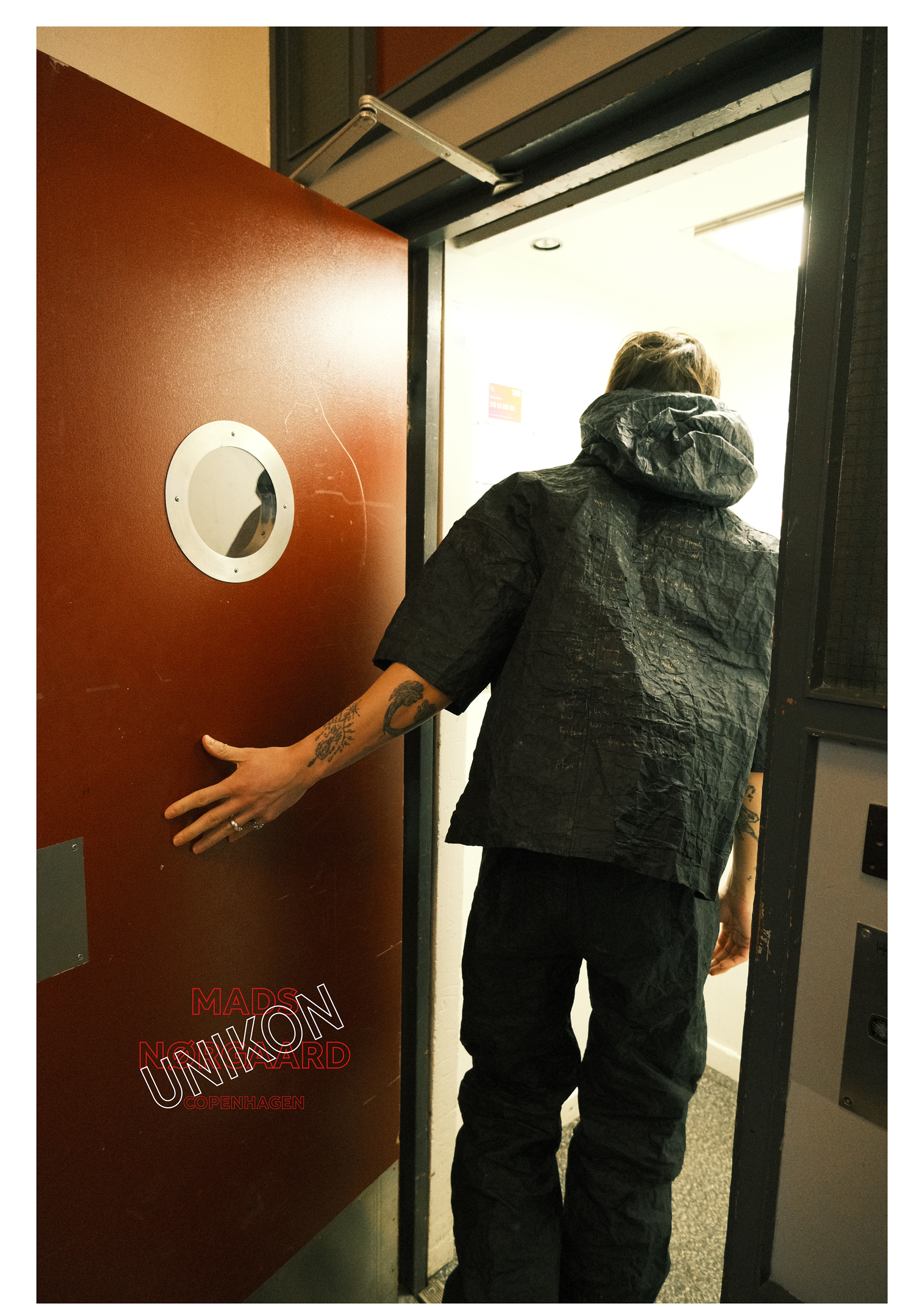
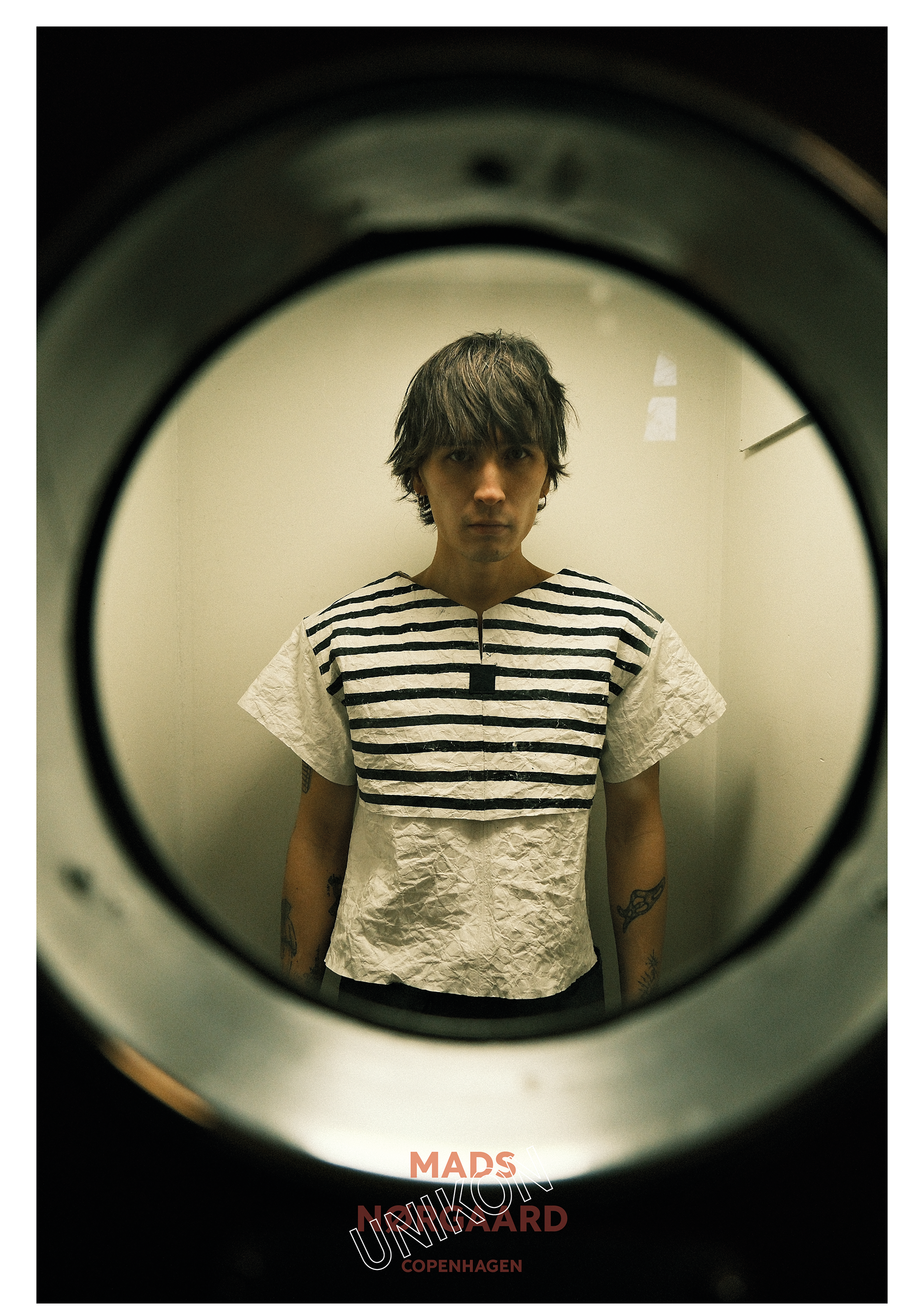
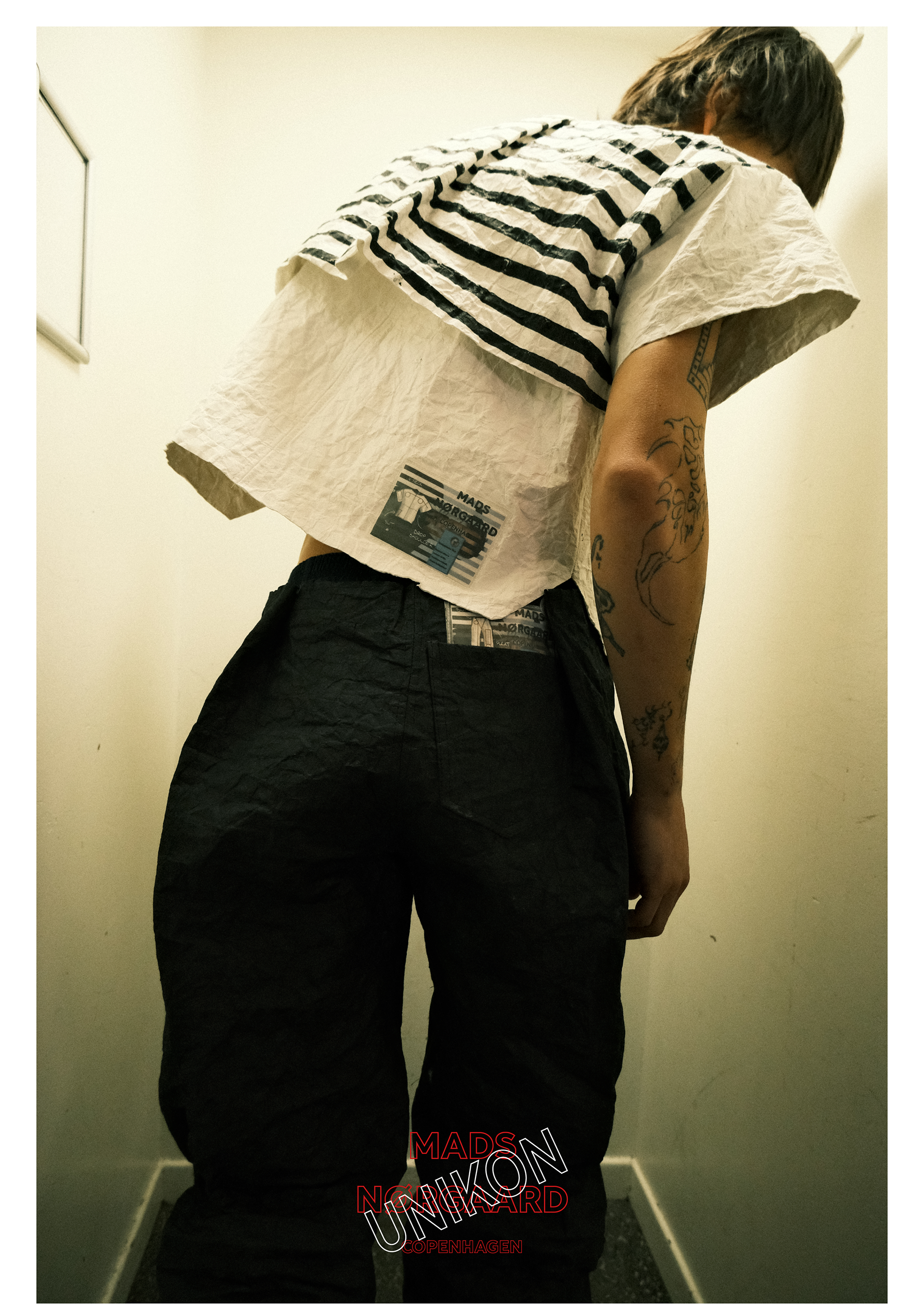
paper clothing
a dream of mine, has always been to create clothing from paper. After a study trip to Portugal, I was introduced to a paper material made from reclaimed cotton. This was the beginning of my bachelor project.
My product challenges the traditional way of thinking, fast fashion.
I want people to pause, wonder, and reflect on their consumption. The goal is to raise awareness about the materials and products we choosE or discard, based on real needs.

RESEARCH QUESTION
How can I design a valuable capsule collection for Mads Nørgaard Copenhagen, based on an unexplored resource from reclaimed cotton production, with the aim of challenging the phenomenon of fast fashion?
sup quesrtions:
// Who is Mads Nørgaard Copenhagen, and what defines their aesthetic? What are their primary strengths?
// Which segment of Mads Nørgaard Copenhagen’s target audience could be potential buyers for my product?
// Is it possible to use a paper-based resource for clothing, and can I reduce , or completely eliminate, the end-of-life impact of garments produced from this material?
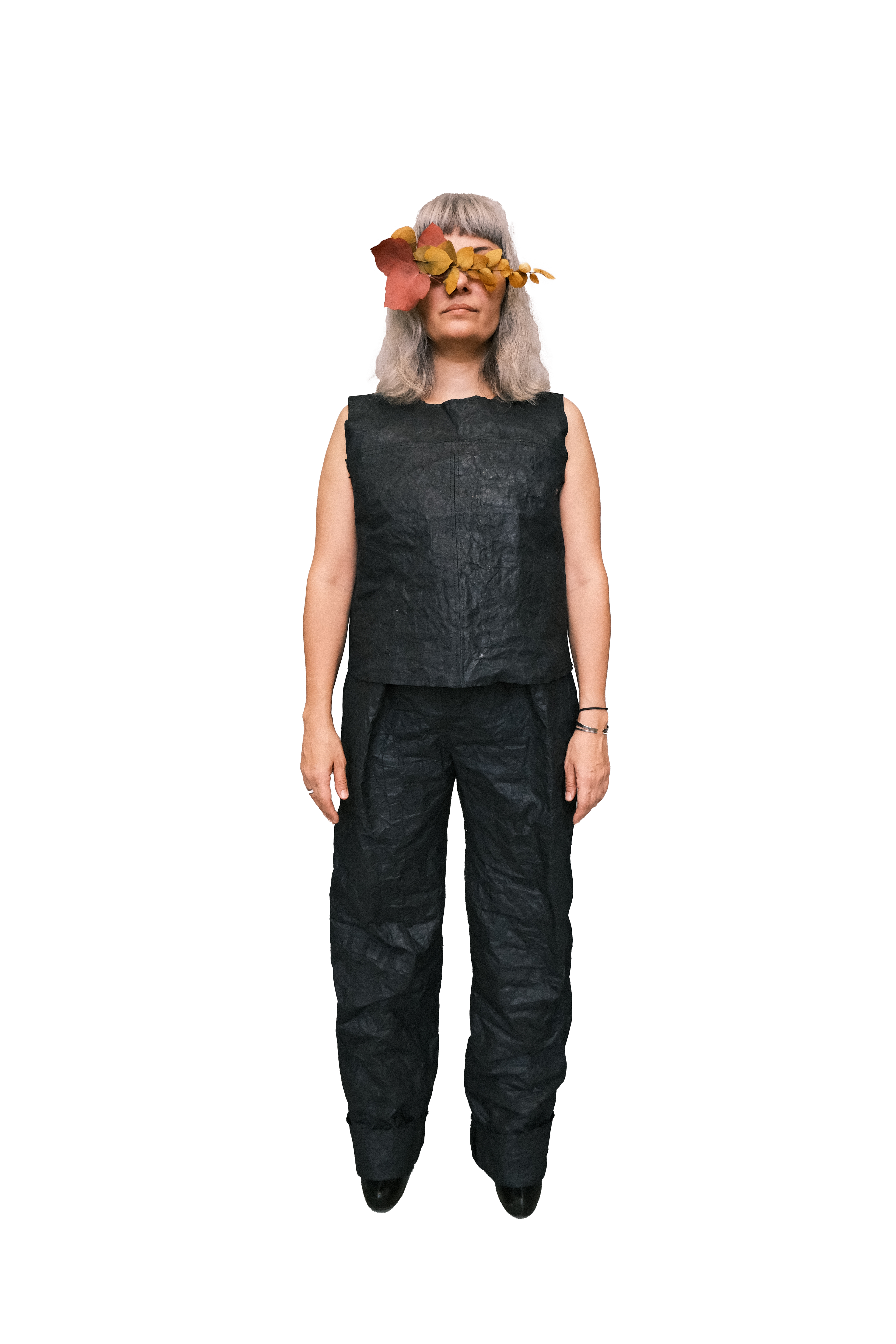

first phase - decoding
decoding the company & the store "nørgaard paa strøget" to find the target group for my product
- målgruppe - nørgaard paa strøget
second phase - wardrobe study
Wardrobe studies på the prefound target group, to gain knowledge about preferences
- metoder - daily catalouge og wardrobestudies.
third phase - Material driven design (mdd)
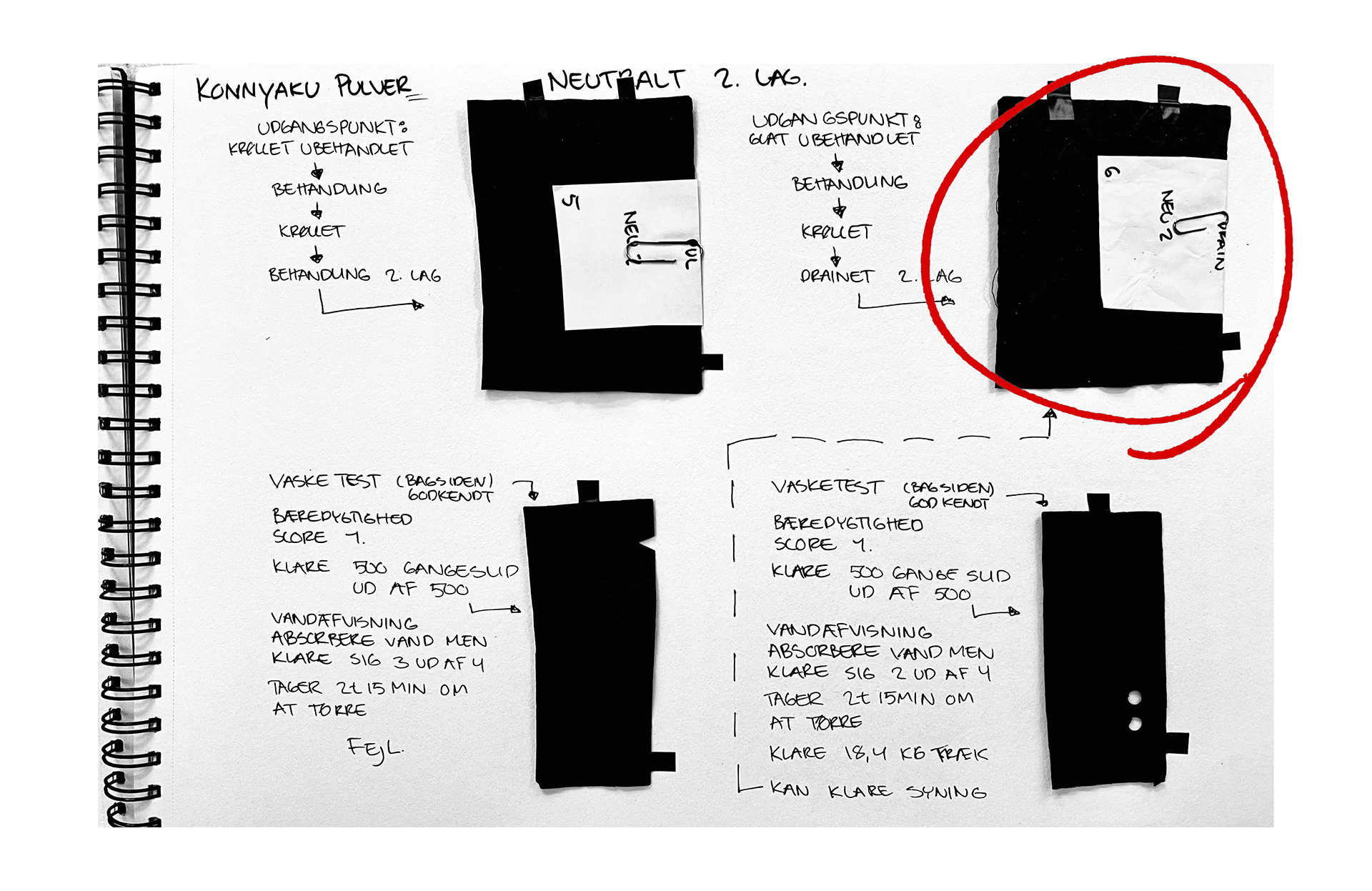
The material has been the central focus in the project, and the design has been based on the material's premises. To add strength to the material, I have tested two different treatment methods.
- Konnyaku pulver.
- bivoks.
- bivoks.
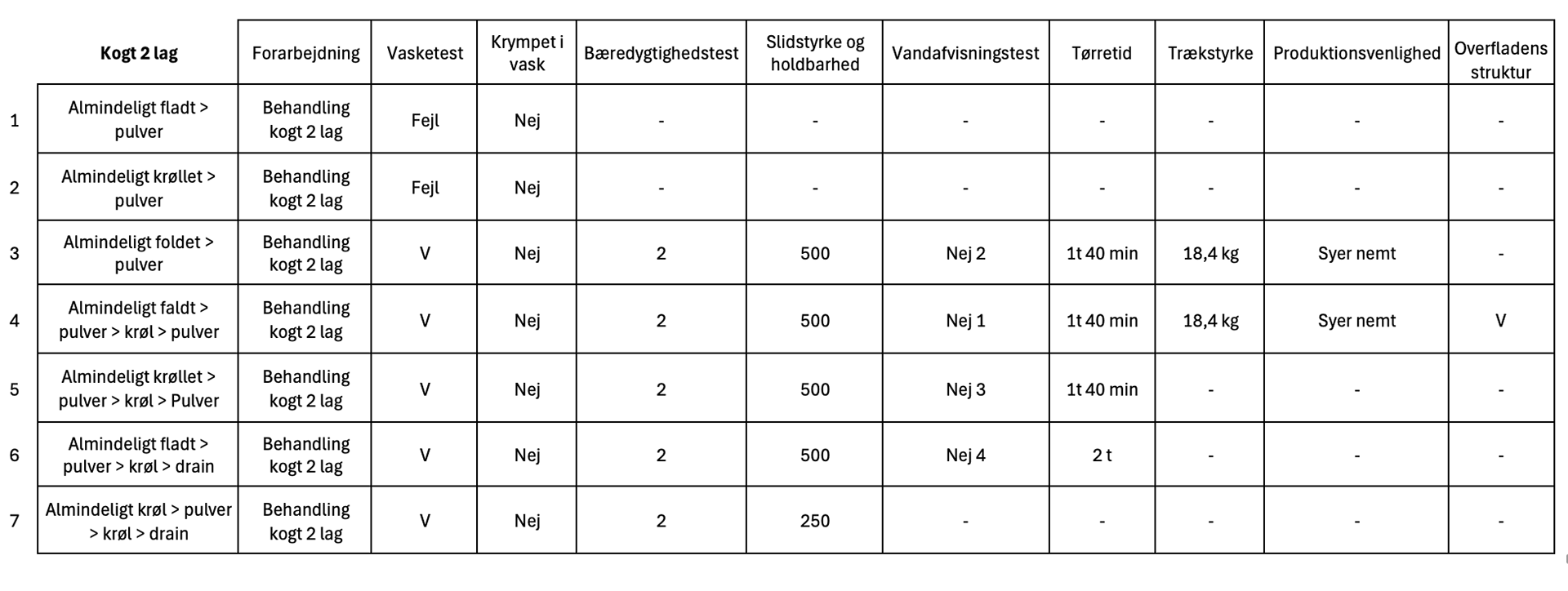
37 differently treated materials was tested, based on requirements for regular clothing.
i ended up with boiled konnyaku treatment in two layers.
(for more information about my research, look in the "thesis site"
(for more information about my research, look in the "thesis site"
video of the treatment process.
Test schedule
To ensure sustainable designs, I have drawn on a range of inspirational sources and methods:
Bauhaus – Life’s Principles – Aesthetic Sustainability
Bauhaus – Life’s Principles – Aesthetic Sustainability
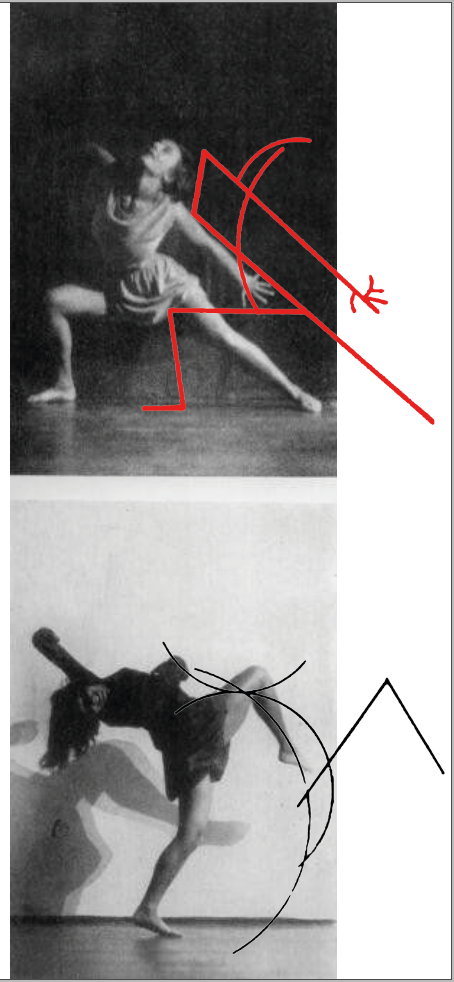
The simplicity of forms.
The Bauhaus movement (1919–1933) revolutionized design by uniting art, craftsmanship, and technology. Known for the principle "Form follows function," they created minimalist, geometric designs where aesthetics reflected functionality. The goal was to produce beautiful, functional, and economically accessible products for everyday people.
This approach aligns with Mads Nørgaard Copenhagen’s philosophy of designing for everyday use. Bauhaus’ minimalist principles and use of circles, triangles, and squares will be integrated into the continued design process to create interesting silhouettes.
Life’s Principles
This method ensures a sustainable design process and sets guidelines for sketching.
“Be Resource Efficient (Material and Energy)”
Recycle All Materials – Creative use of production leftovers.
Fit Form to Function – Balancing material, functionality, and target audience requirements.
Use Multi-Functional Design – Optimizing design and material use for sustainable solutions.

Aesthetic Sustainability
To incorporate aesthetic sustainability into my products, I will use the following components:
Becoming Time
- visible creation process (exposed stitching, hand-painted elements, or storytelling)
- creates a relationship between the user and the object.
- visible creation process (exposed stitching, hand-painted elements, or storytelling)
- creates a relationship between the user and the object.
Existent Time
- values aesthetic decay
- the passage of time enhances the beauty of materials. (Inspired by Wabi-sabi,)
- this can be integrated through reuse, natural aging, and visible wear.
- values aesthetic decay
- the passage of time enhances the beauty of materials. (Inspired by Wabi-sabi,)
- this can be integrated through reuse, natural aging, and visible wear.
Being Time
- encompasses the experience of an object from first encounter to full engagement.
- It can be extended to enhance aesthetics through complex compositions, asymmetry, unconventional materials, multifunctionality, and by showcasing both the creation process and the effects of time.
- encompasses the experience of an object from first encounter to full engagement.
- It can be extended to enhance aesthetics through complex compositions, asymmetry, unconventional materials, multifunctionality, and by showcasing both the creation process and the effects of time.

Room for Layering & Gender Neutrality // Target GROUP
Form Follows Function // Bauhaus philosophy & geometric shapes
Recycle All Materials // Life’s Principles // Use Multi-Functional Design
Moodboard
Sign offs dna


Sketching Process
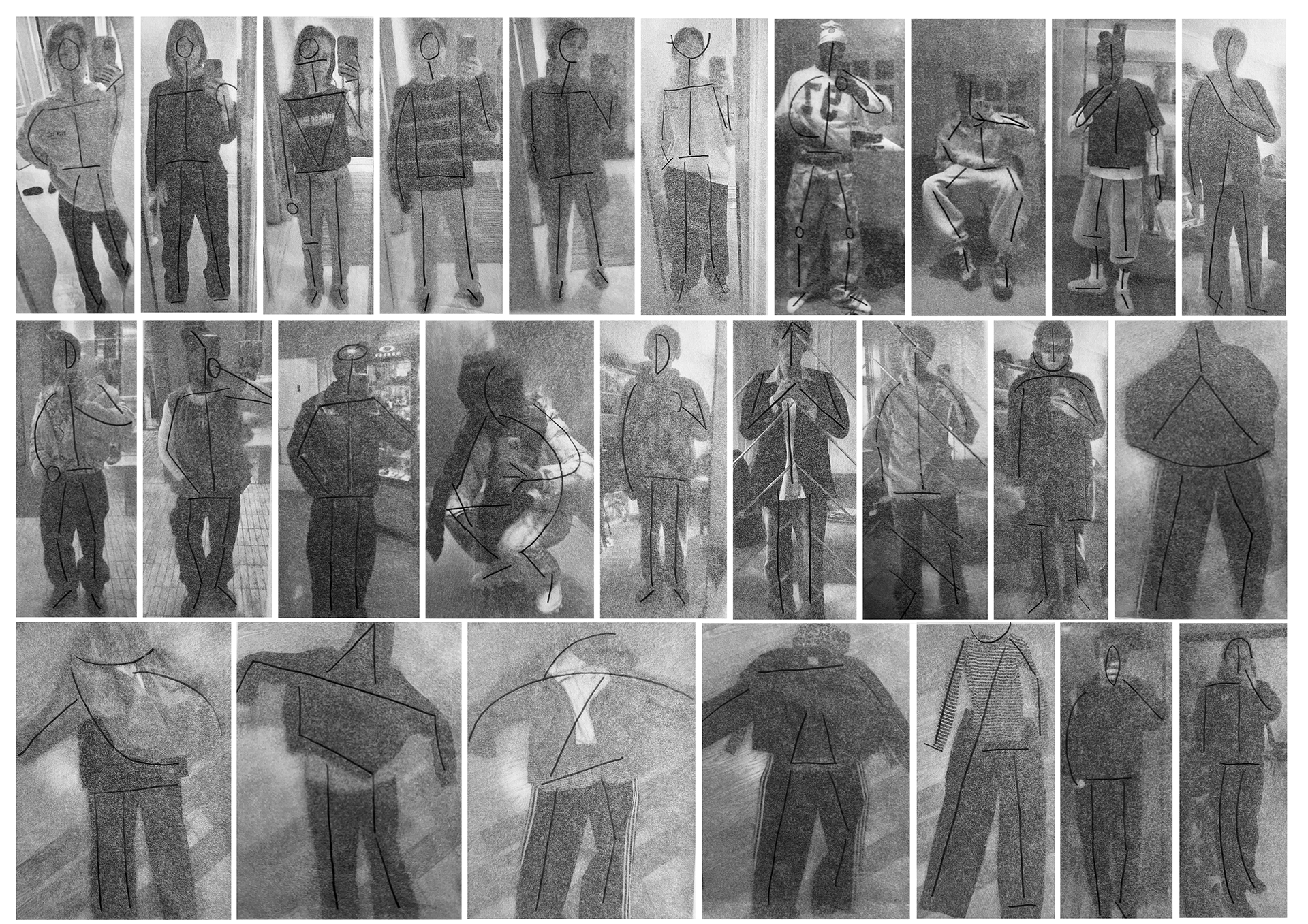
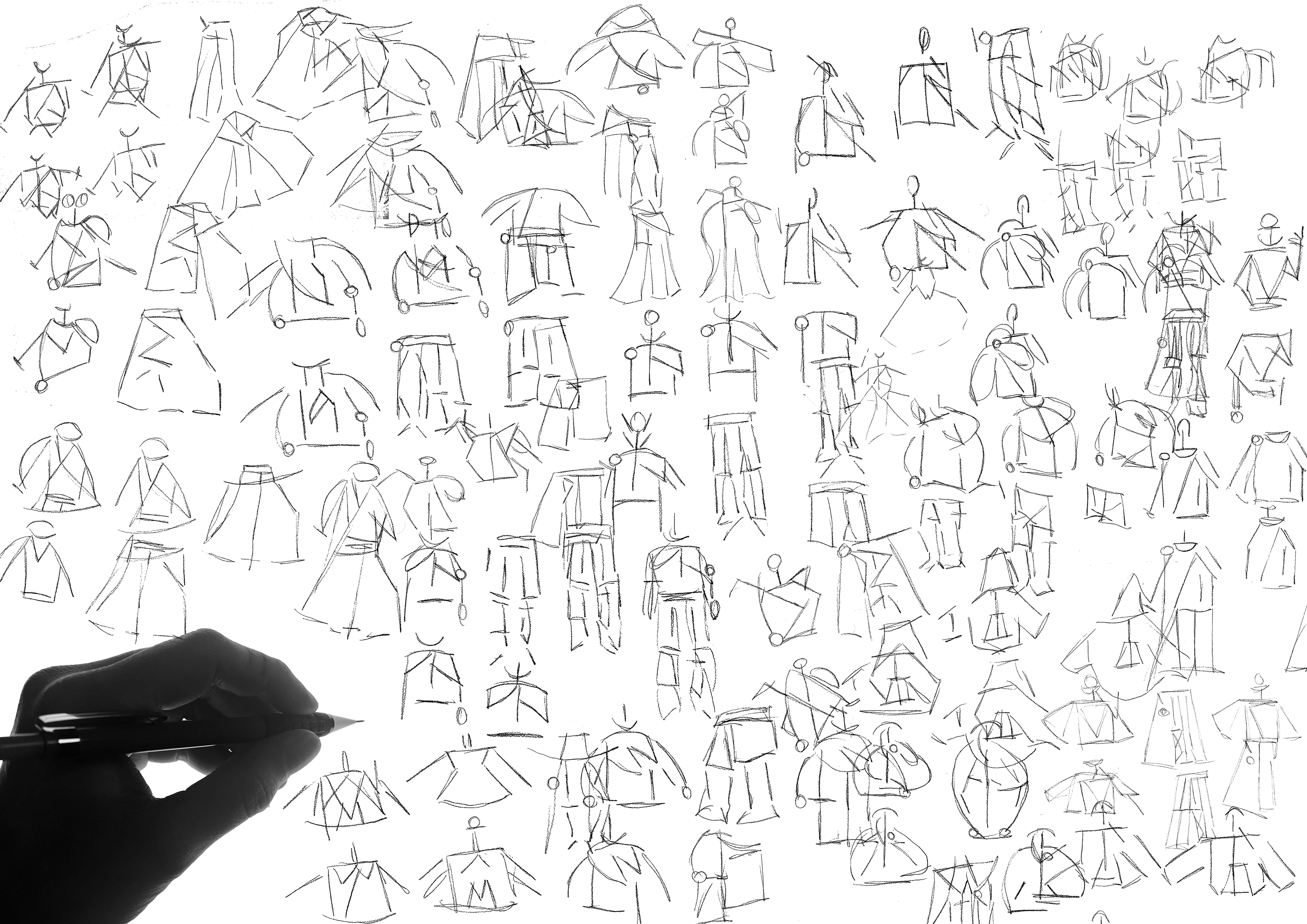
images from the daily catalogue wardrobe studies was used to create silhouettes and shapes.
first phase
i draw circles, lines, and triangles using the user’s body proportions, inspired by the approach from the Bauhaus era.
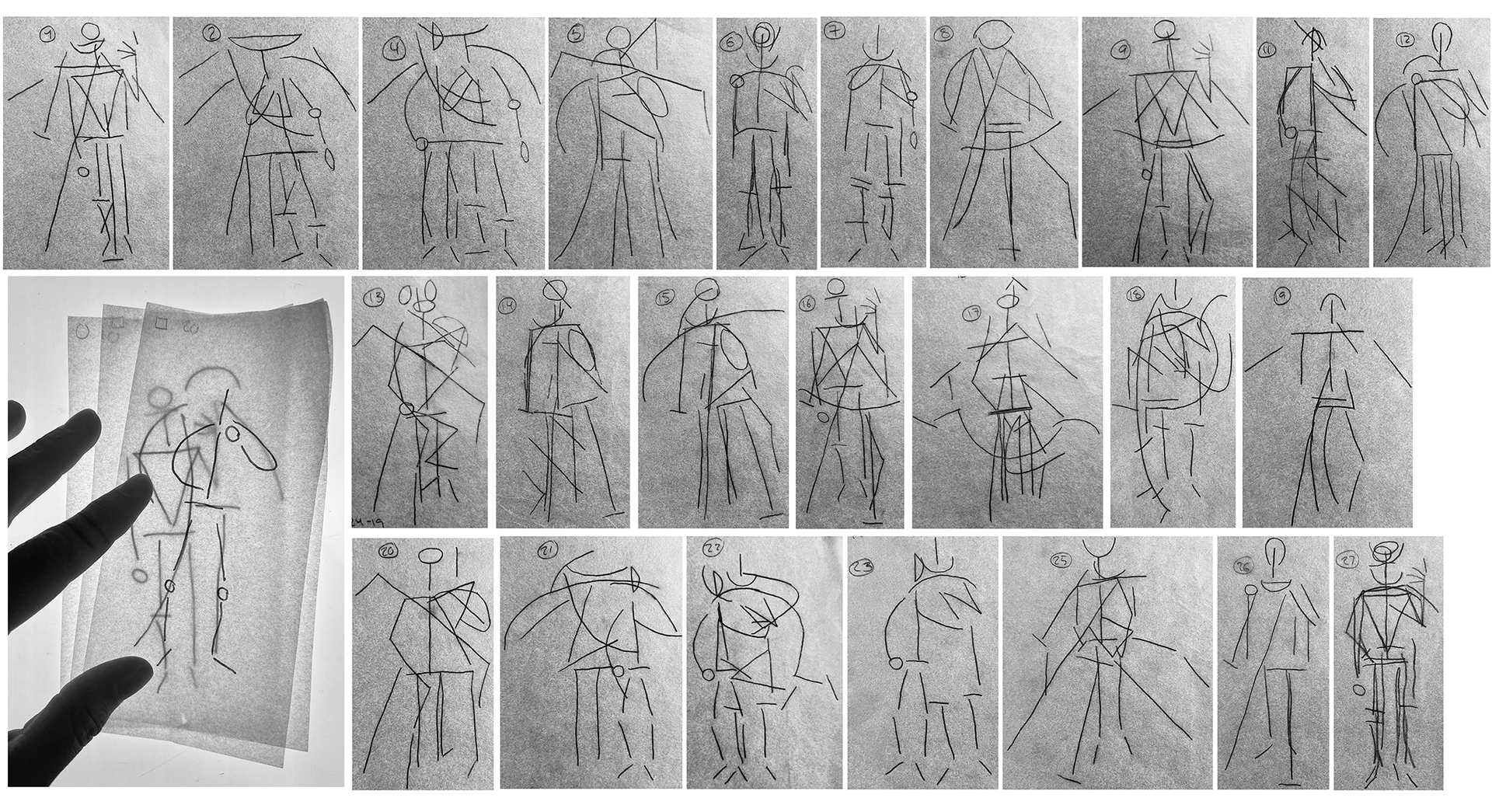
second phase
layering my line drawings on top of each other created more form and volume.
it added substance to the shapes and the roughly sketching of silhouettes began.
it added substance to the shapes and the roughly sketching of silhouettes began.
third phase
roughly sketching on the merged shapes. - here the styles for the collection began to emerge.
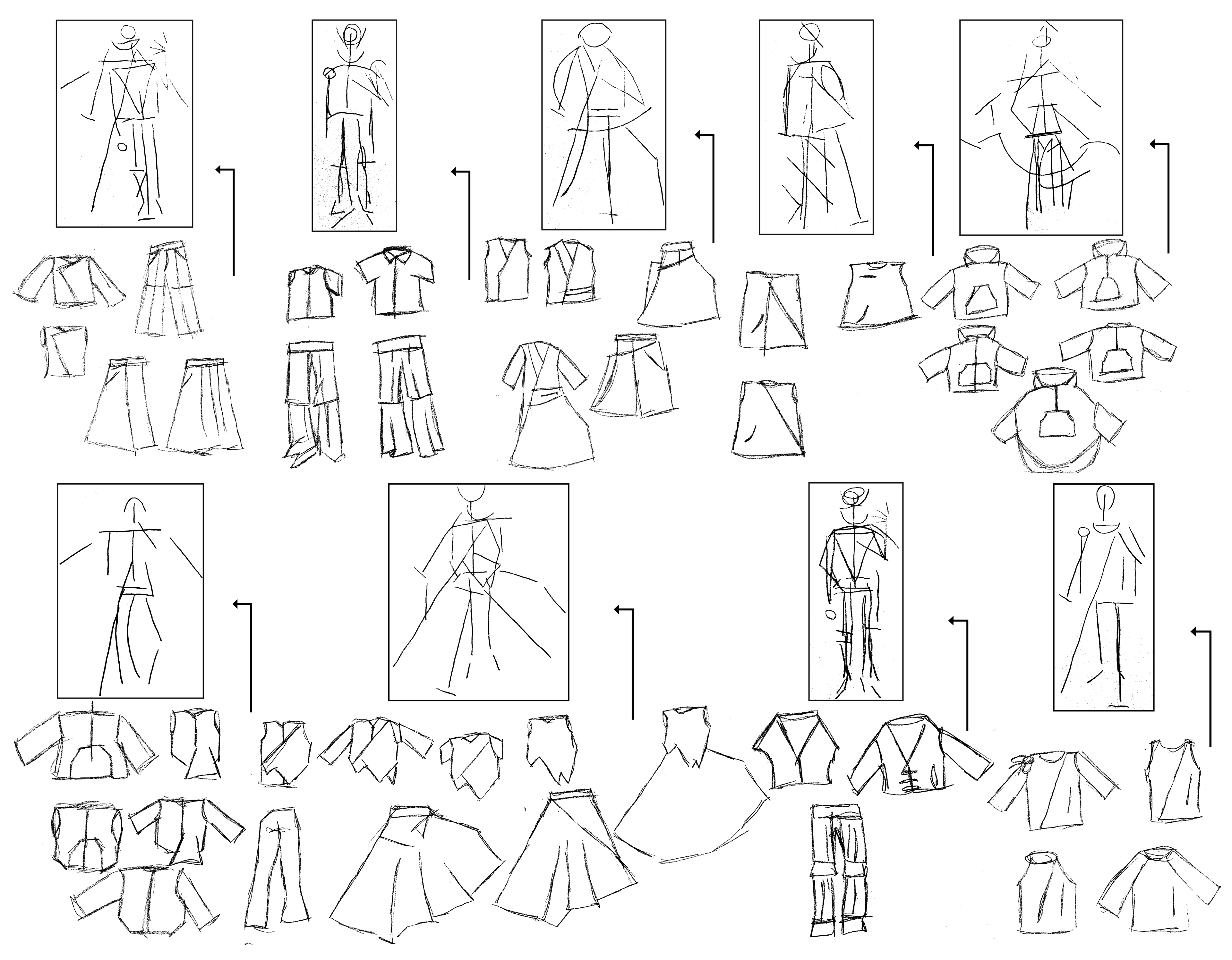
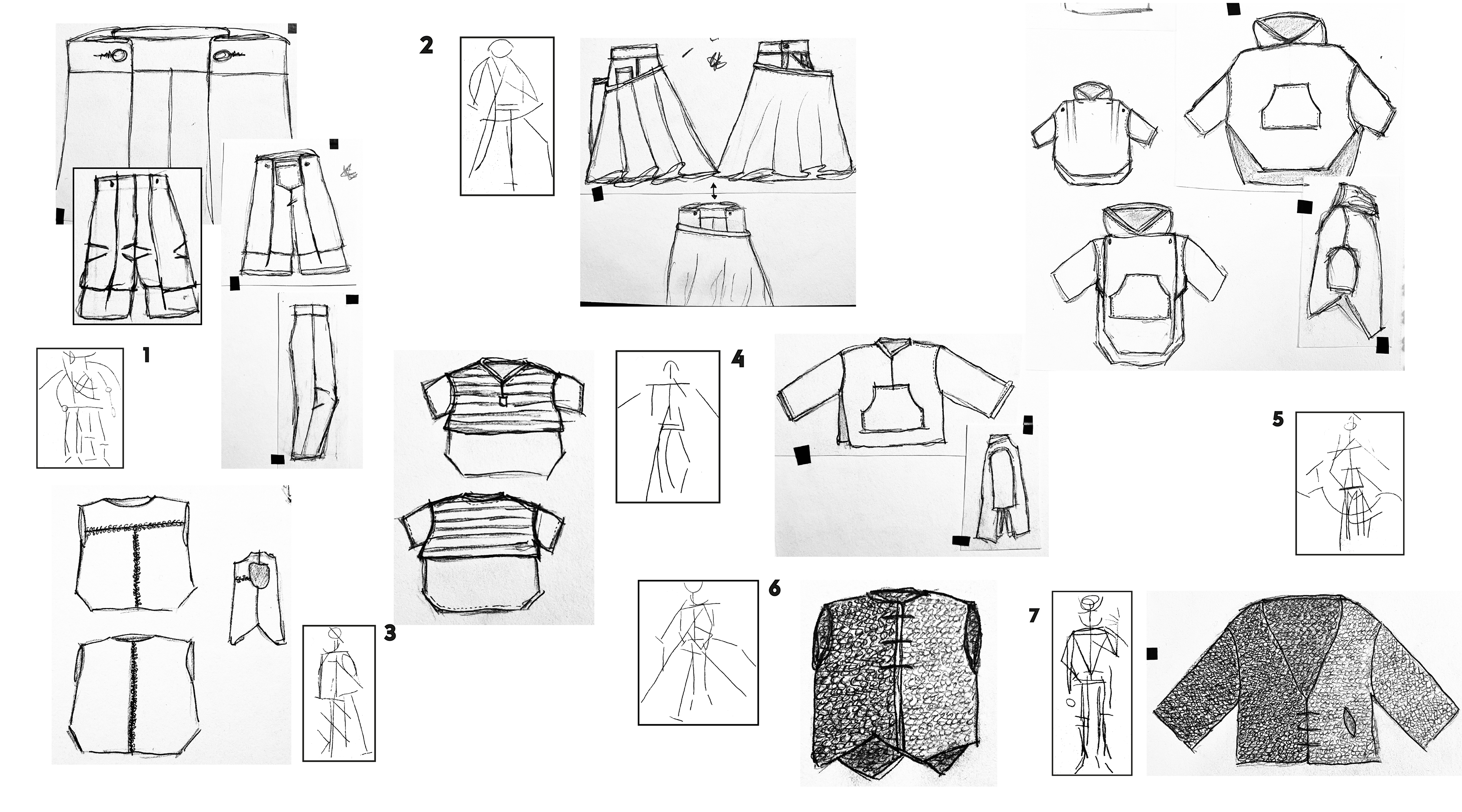
Fourth Phase
Selection of silhouettes and further sketch generation.
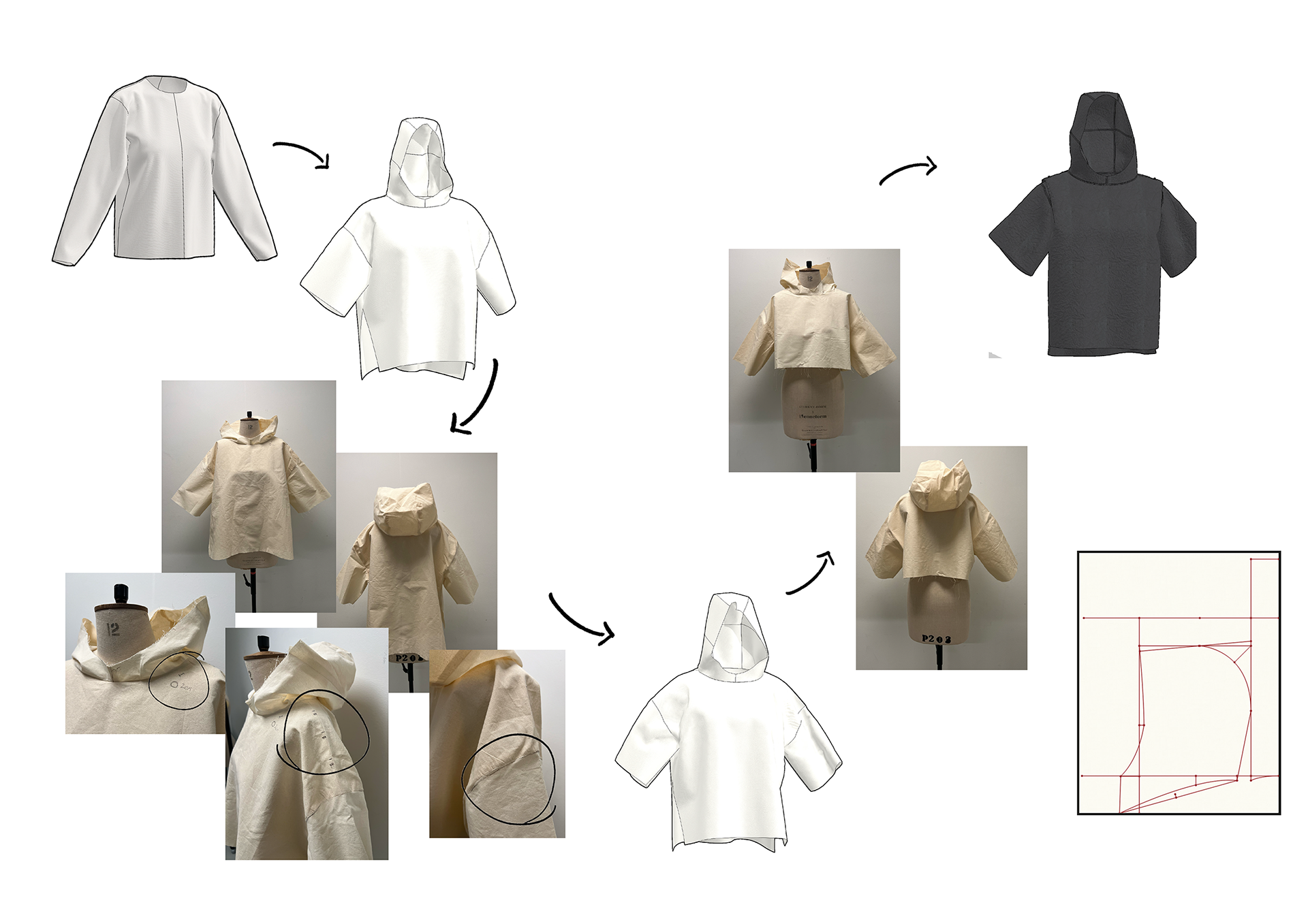
Form Development in CLO3D – THE HoodIE
Development of design DNA

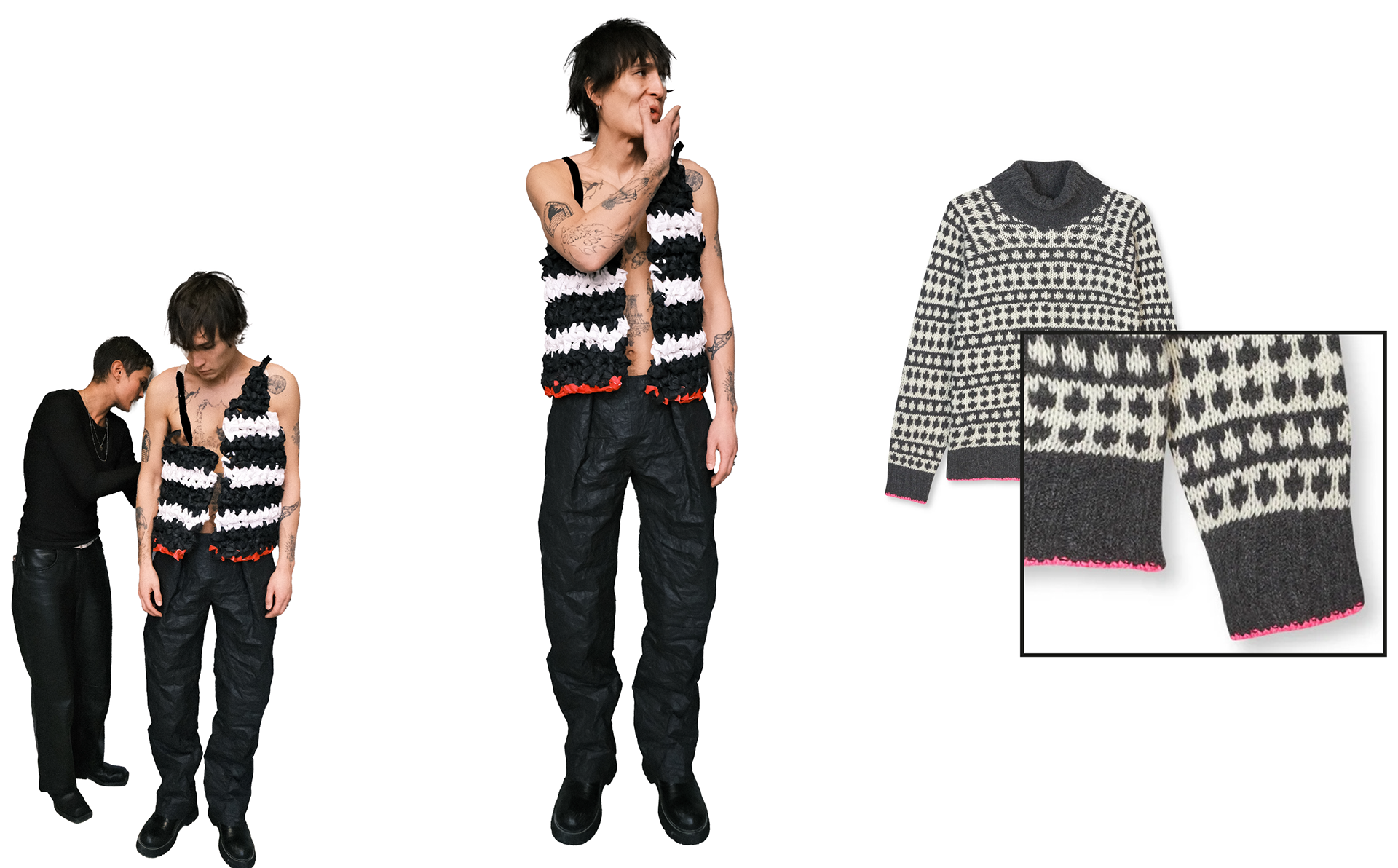
Pop colors and knitwear are a significant part of the DNA of Mads Nørgaard Copenhagen and are always present in their collections.
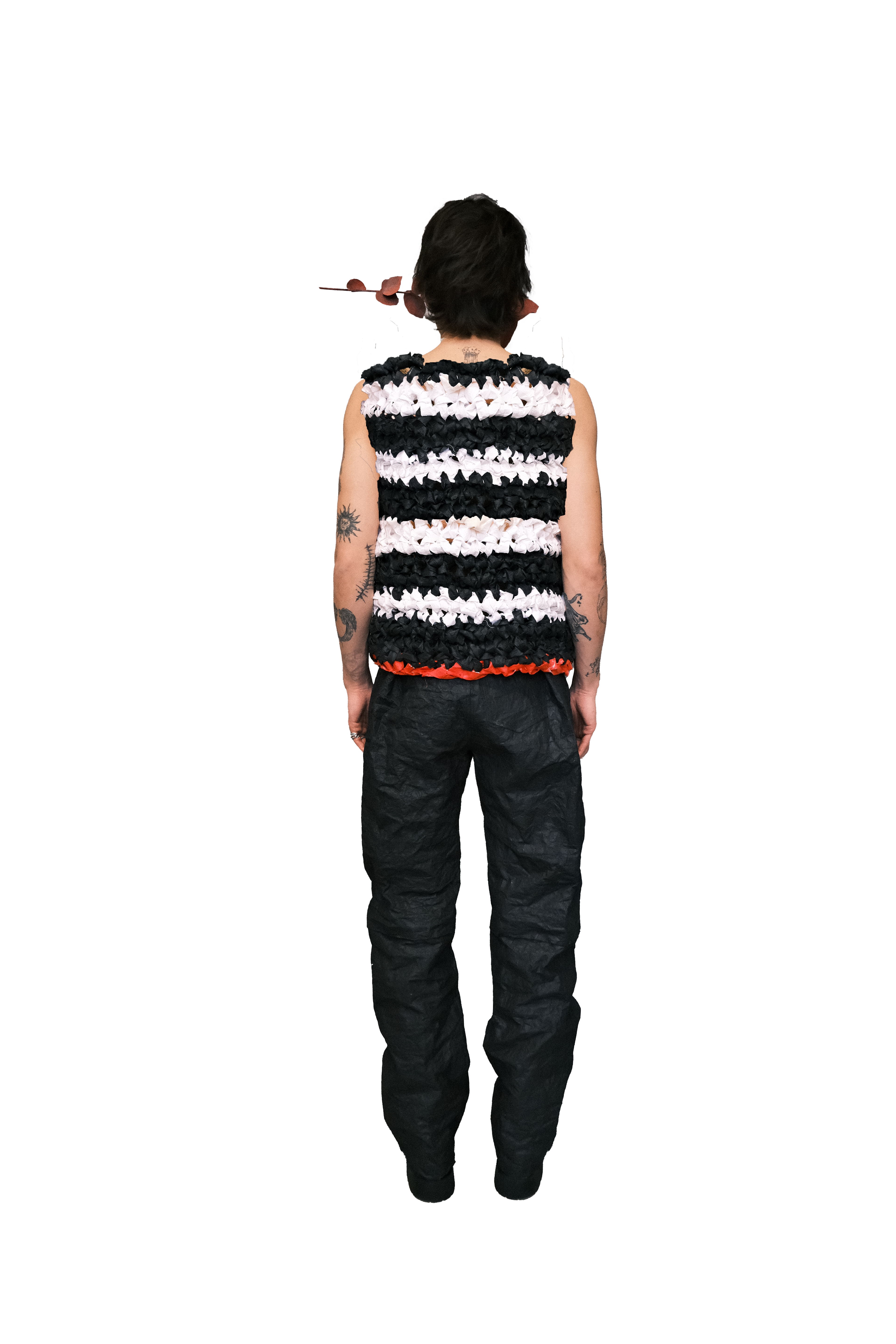
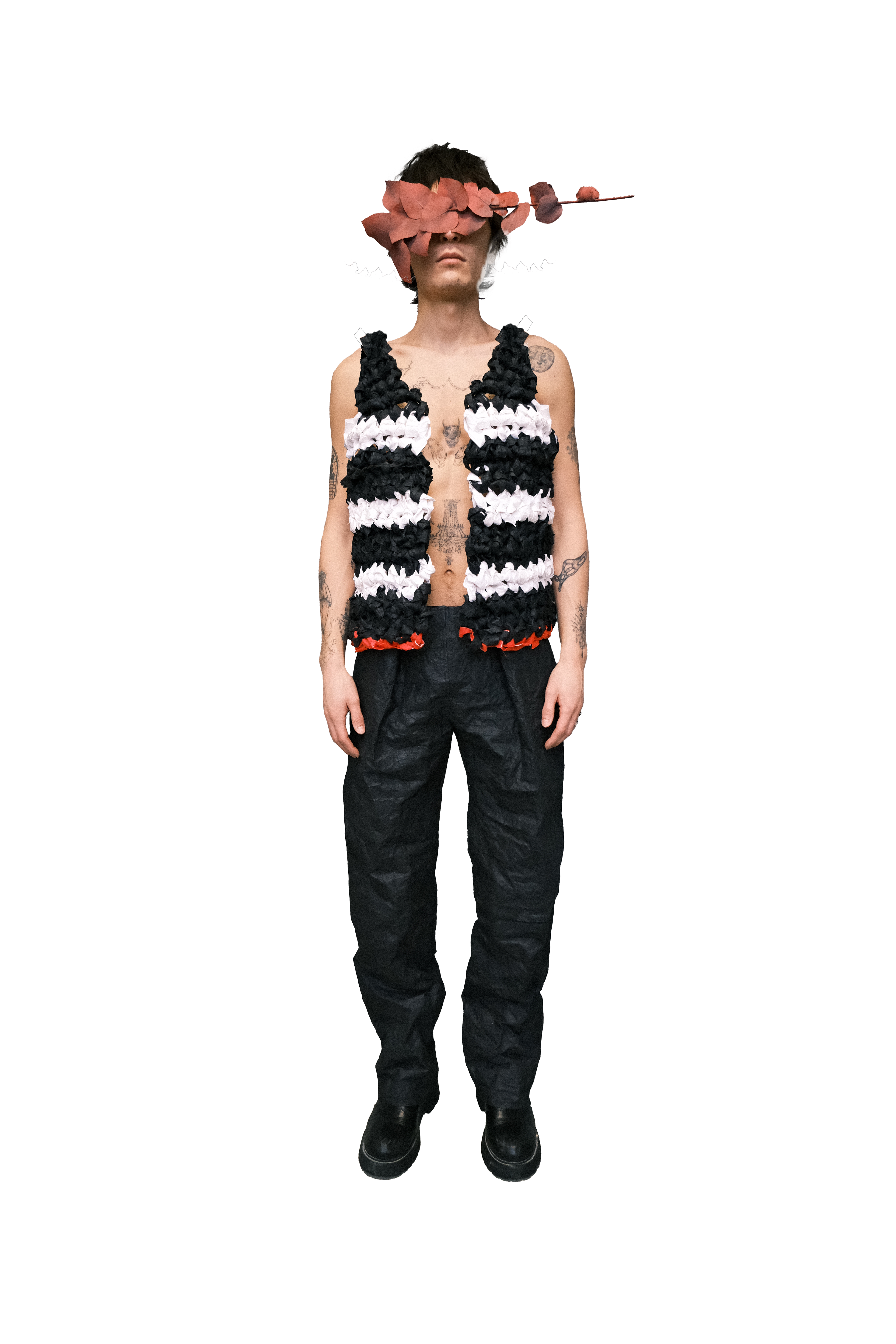
to corporate this, i collected all the leftover materials from production, sew them together, and created yarn for crocheting. it gave me the opportunity to add knits and contrasting colors.

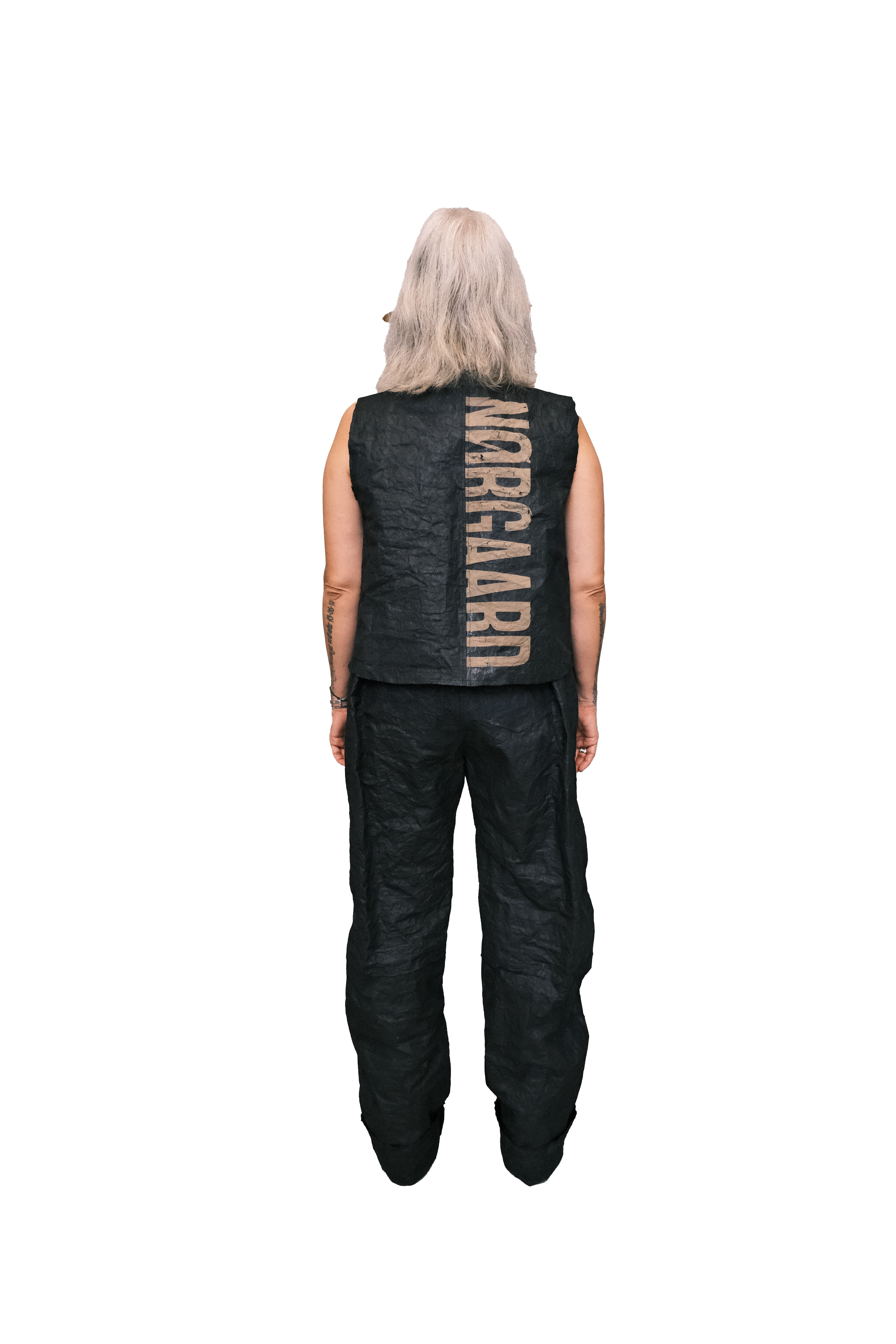
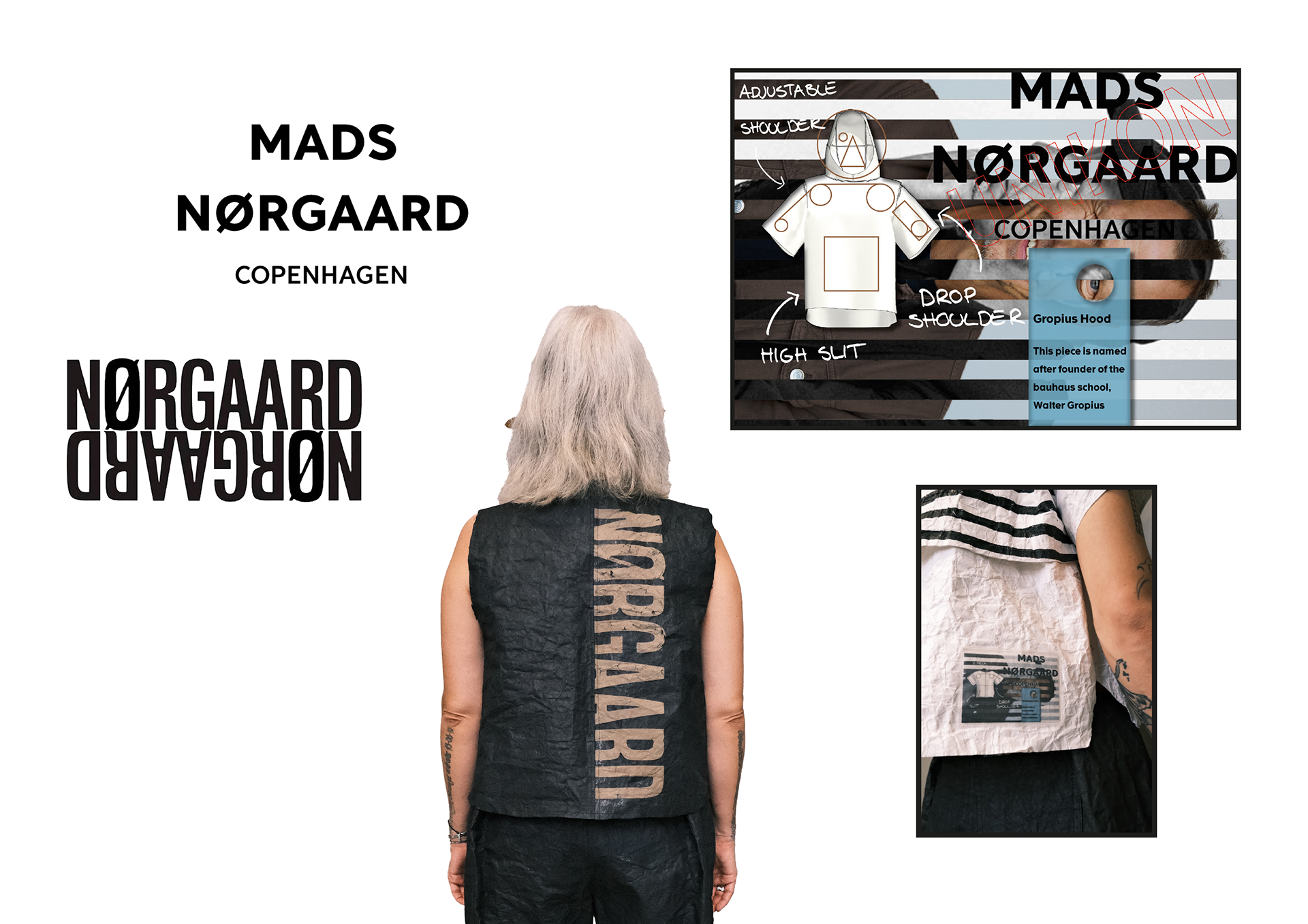
The "Mads Nørgaard Copenhagen" logo and the classic “Nørgaard Nørgaard” print are a prominent part of the brand’s visual identity, often seen on their jeans, workwear and jersey.
Since it plays a central role in the expression, I wanted to integrate it into the collection - but with a more artistic approach.
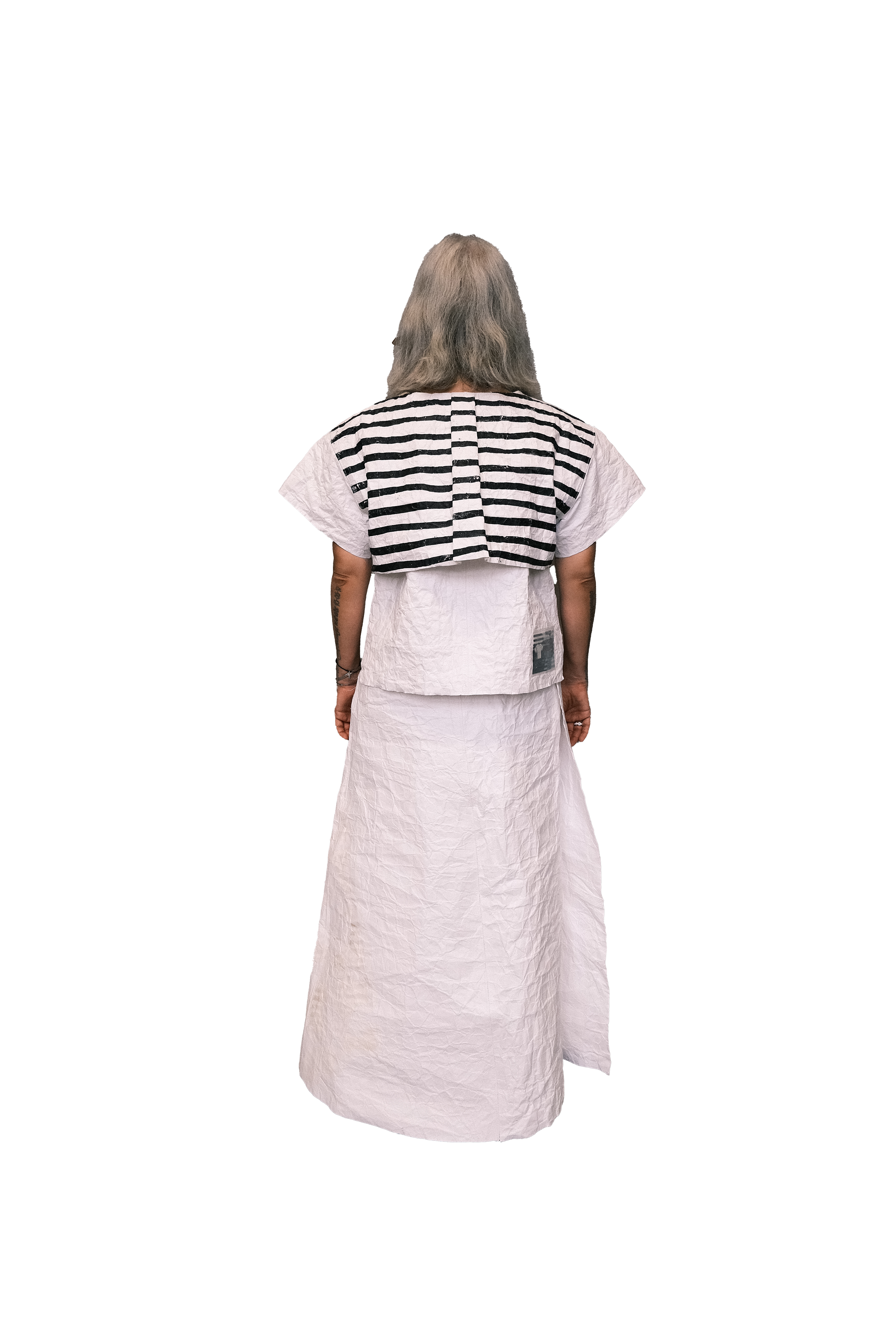
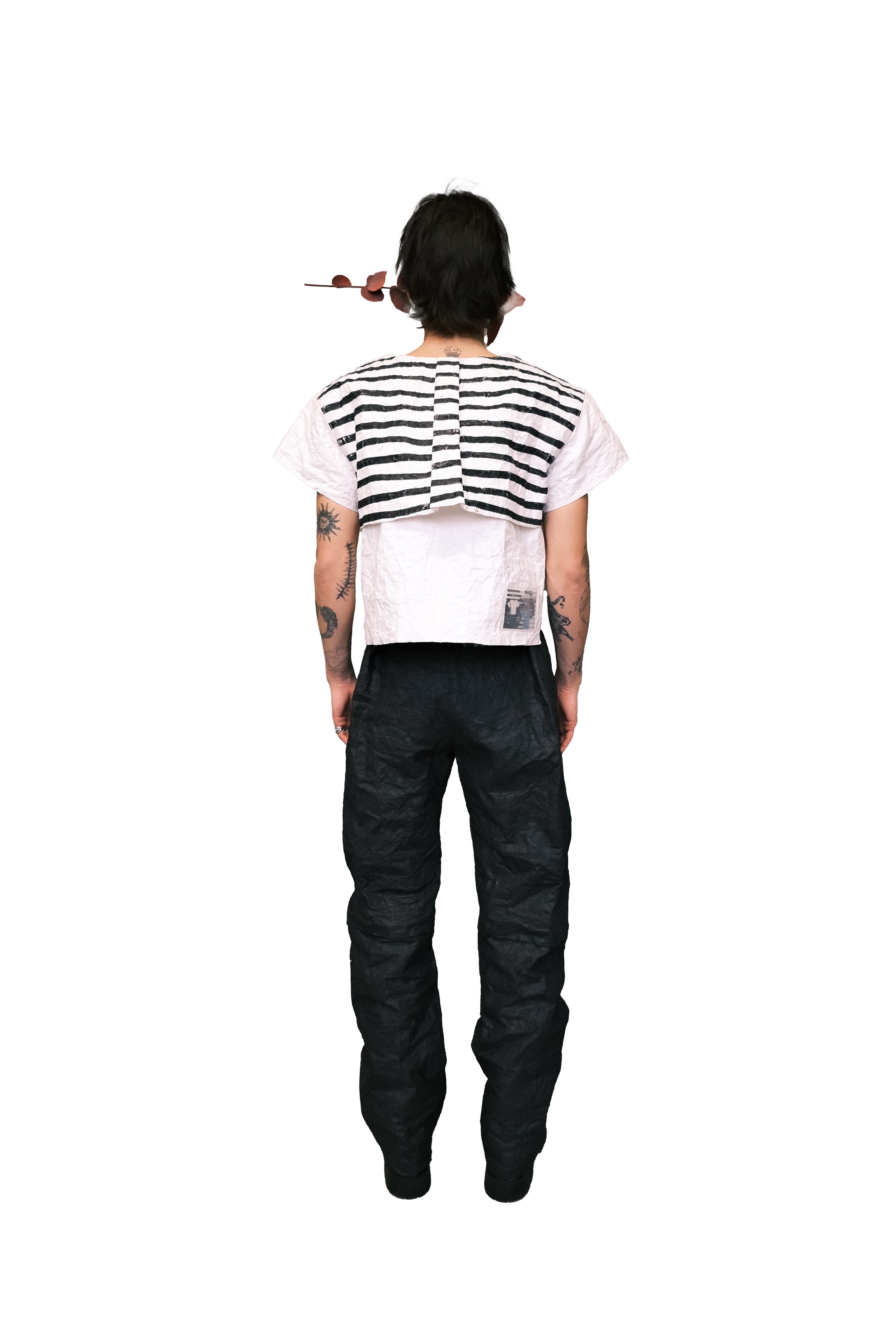
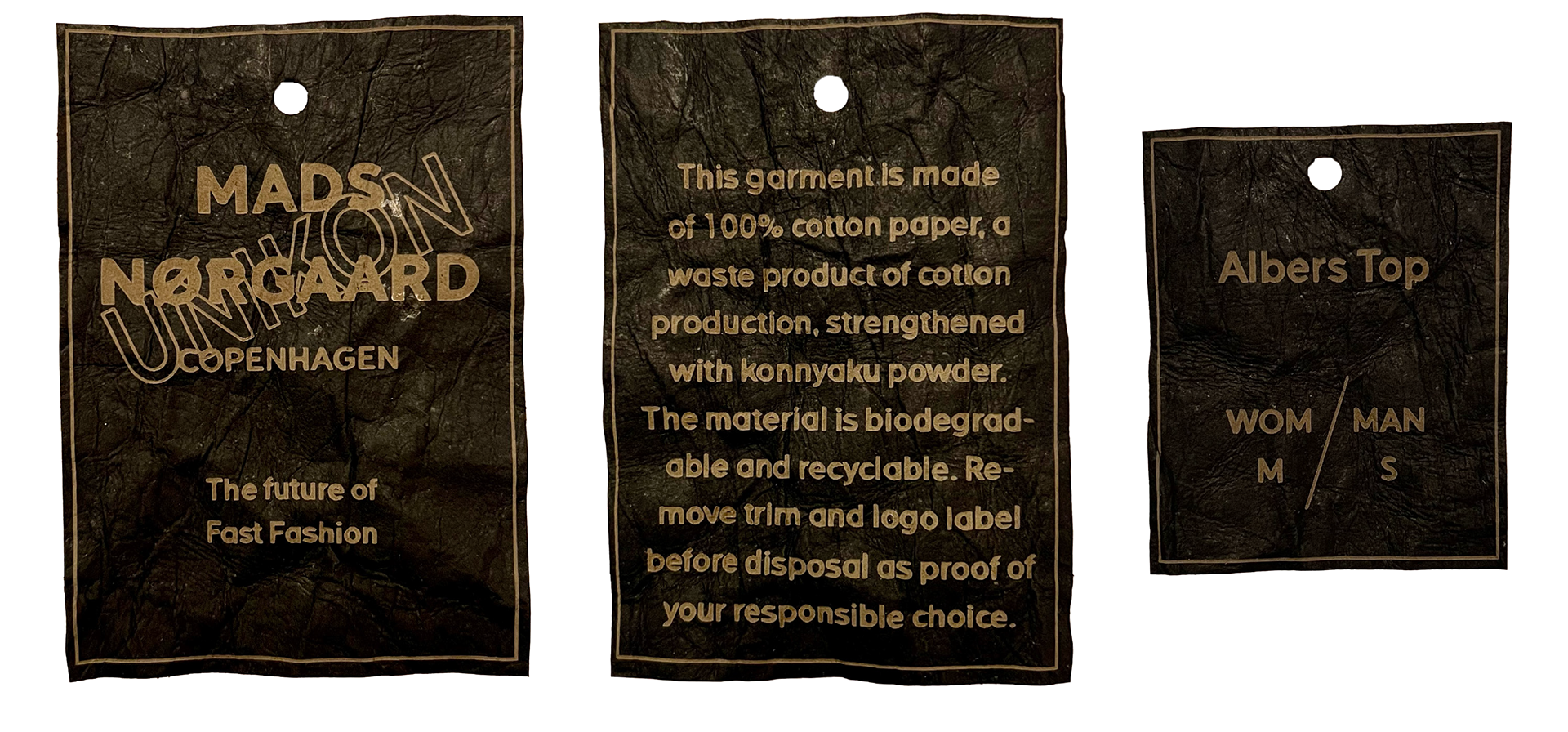
I developed unique logo tags for each individual style. The idea behind this is that the logo can be removed and kept as proof of ownership and as a more responsible choice when the product reaches the end of its life.
To maintain the biodegradability of the collection, the Nørgaard logo was laser-cut directly onto the garment.

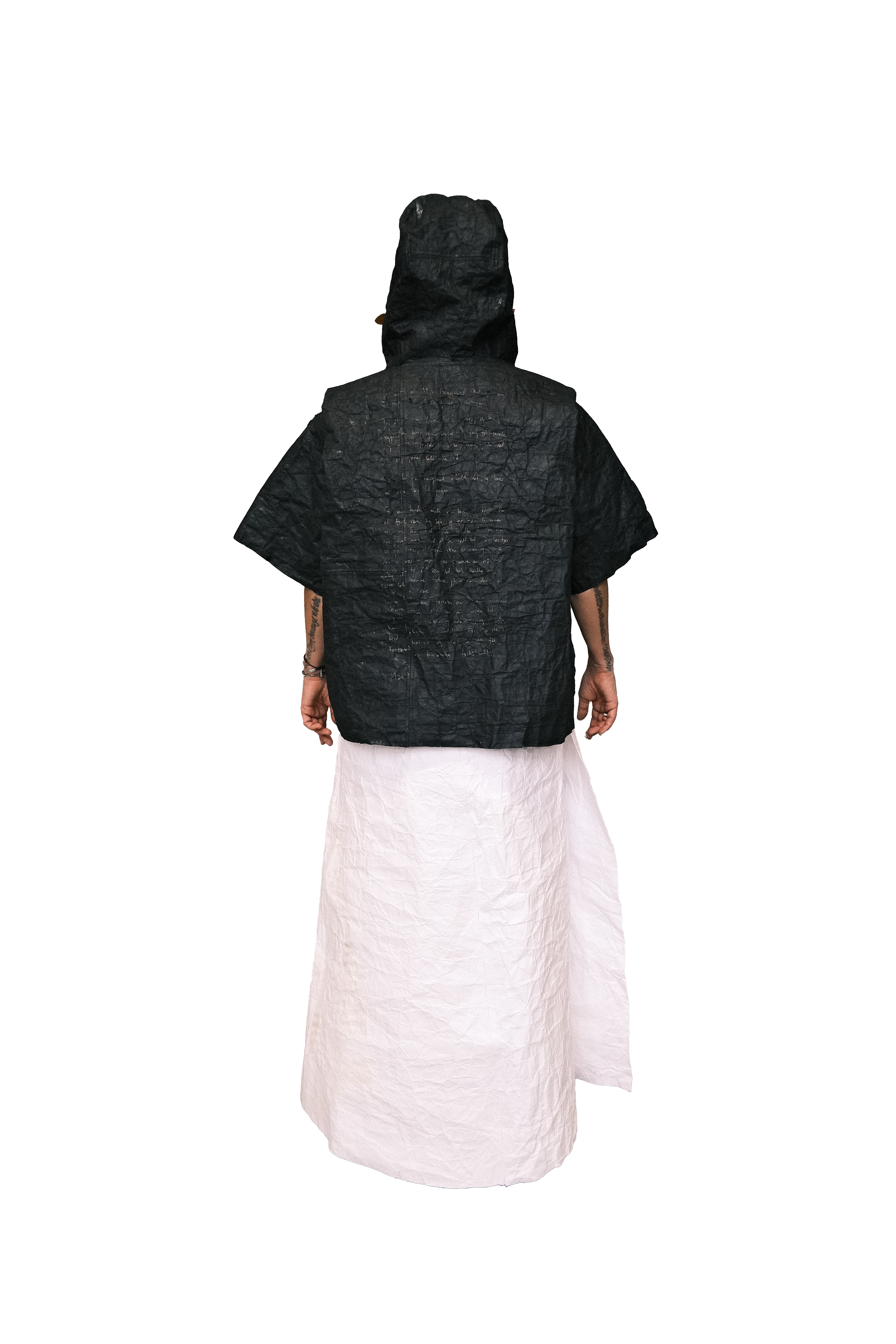
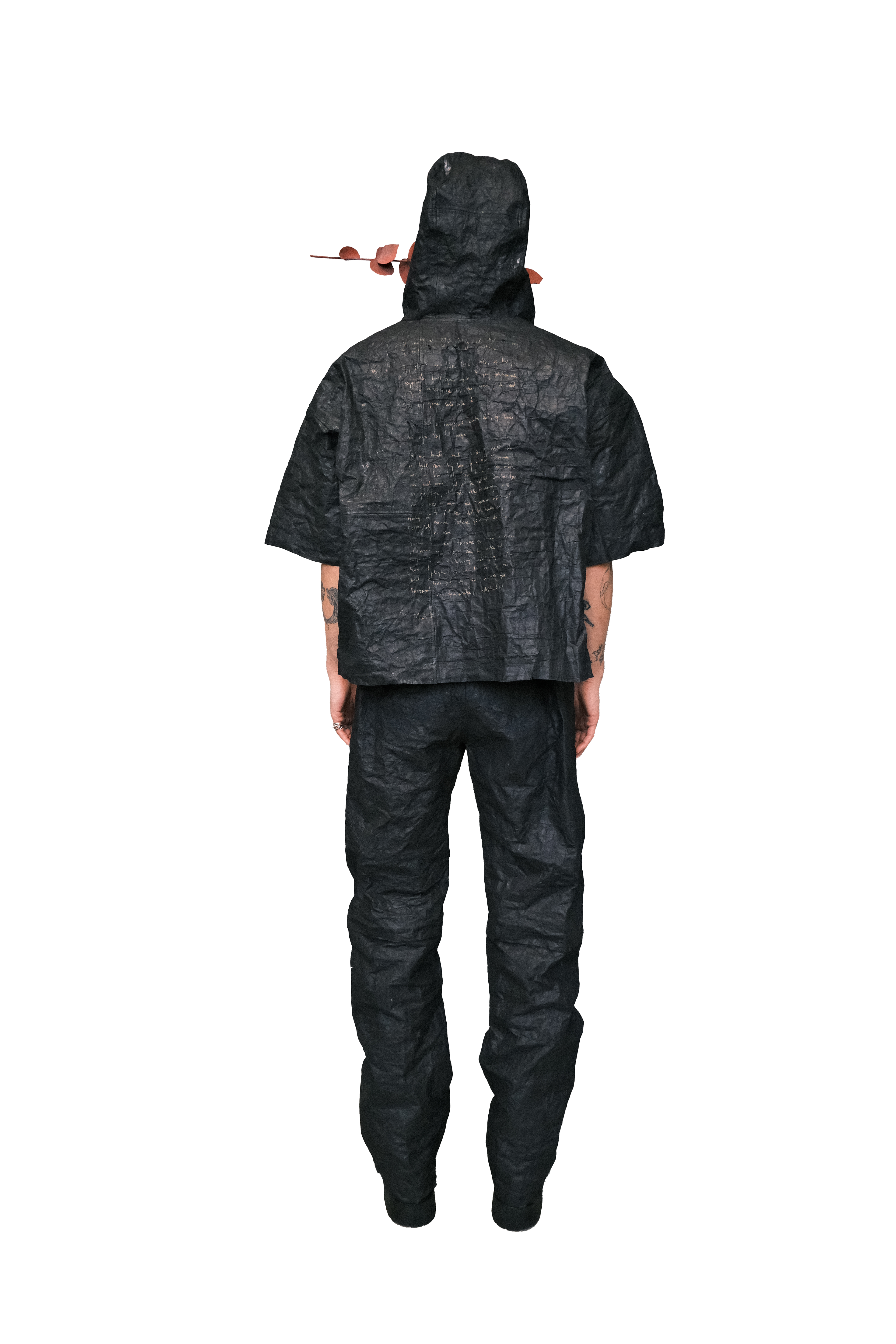
During my internship at Mads Nørgaard Copenhagen, I came across an old lookbook with a handwritten quote by Mads Nørgaard. I felt it was a meaningful way to incorporate a personal print, as the collections at Mads Nørgaard Copenhagen are heavily influenced by prints.
To maintain the biodegradability of the collection, I laser-cut the quote and the 101# SHIRT motiVE directly onto the garment.

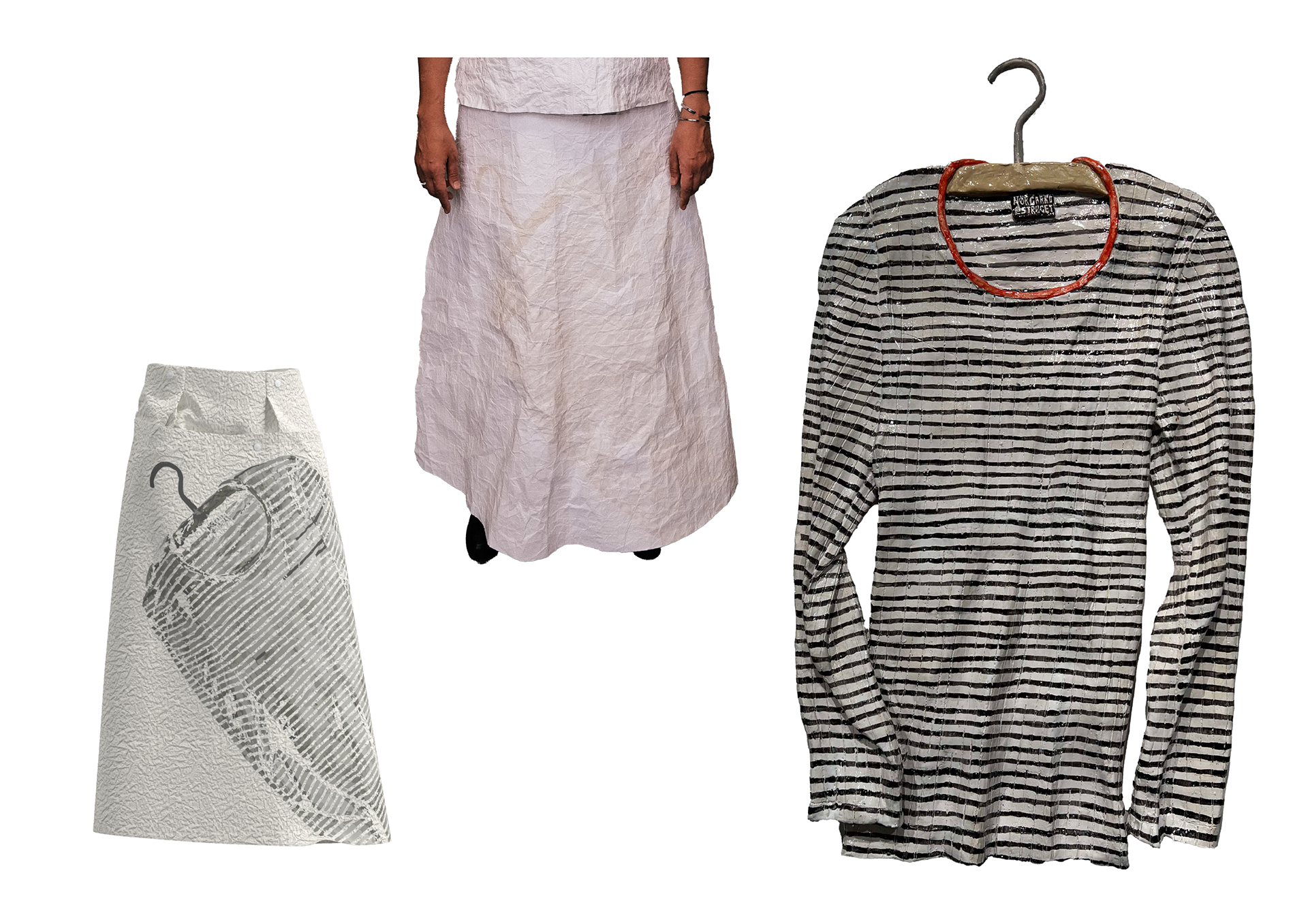
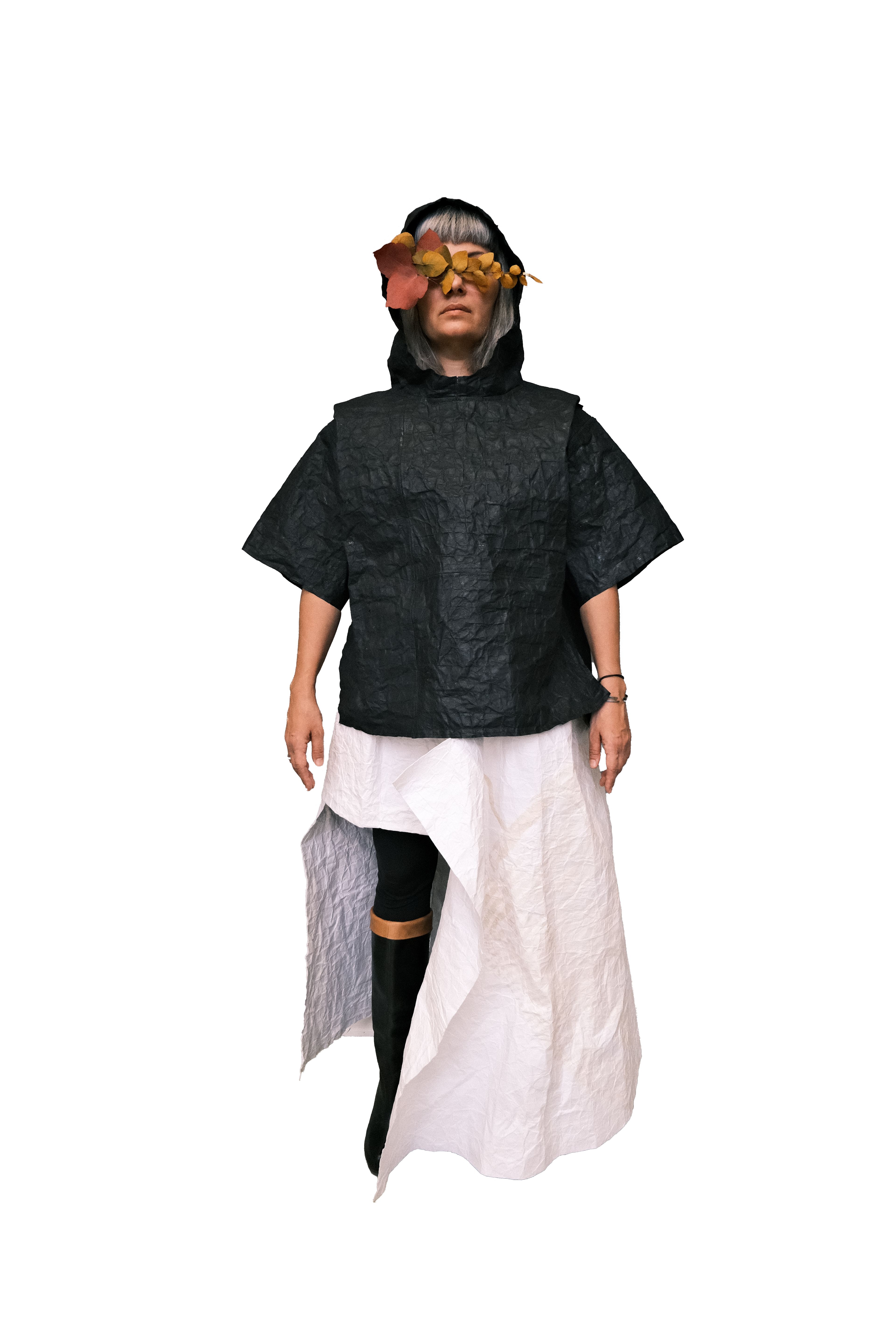
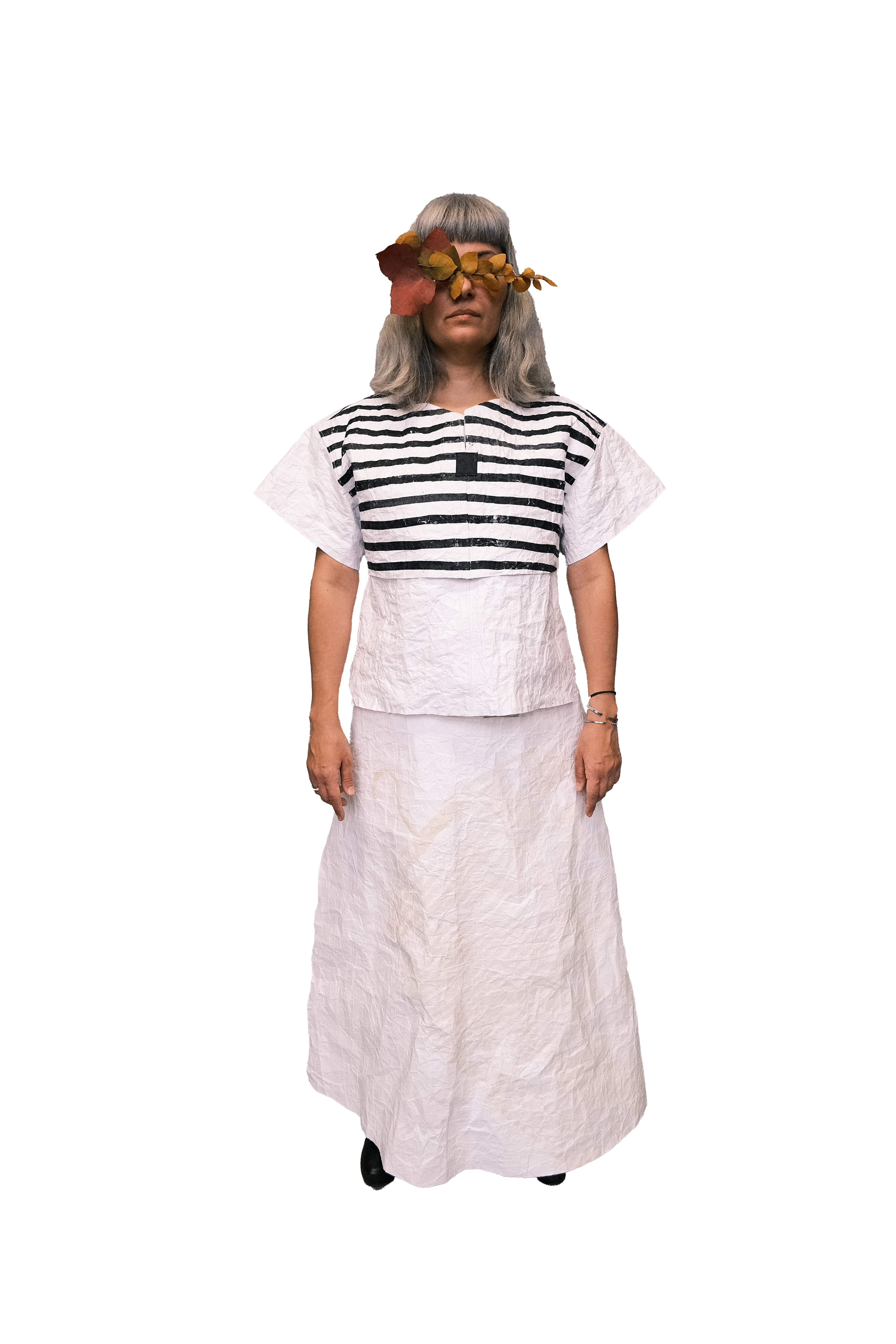
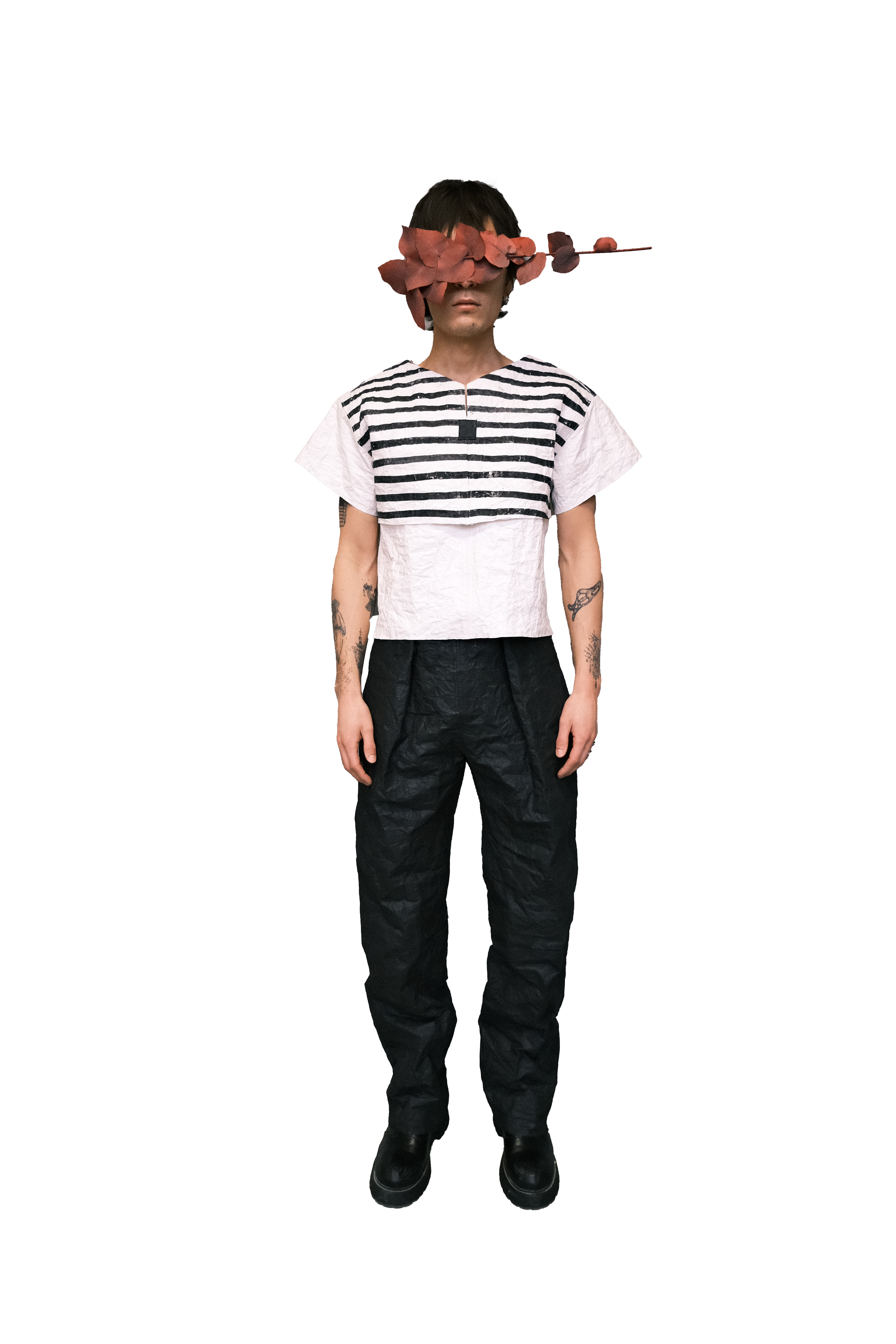
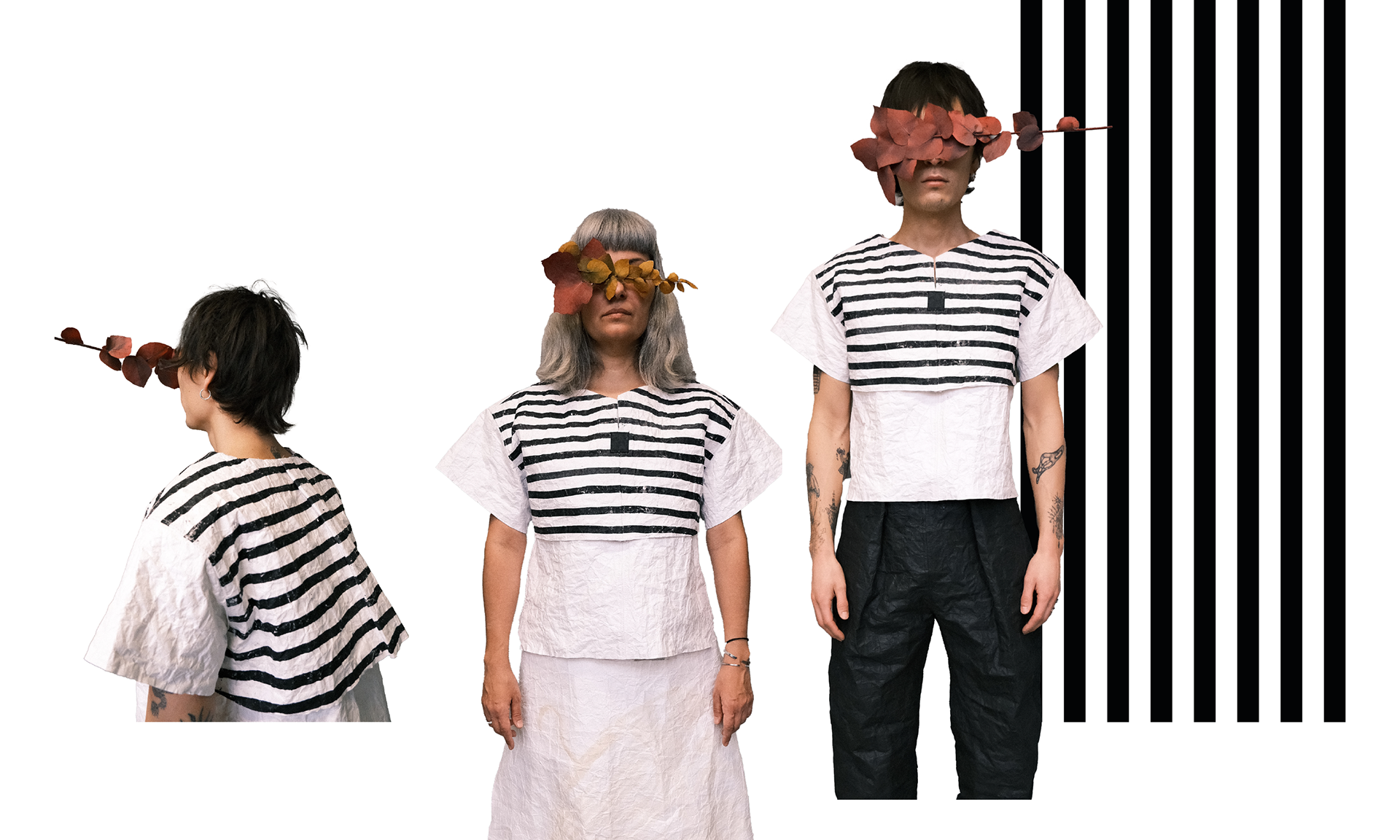
When working with Mads Nørgaard Copenhagen, stripes are inevitable. In my collection, I interpreted them by crocheting with black and white yarn and hand-painting the T-shirt with black fruit dye. The hand-painted details create an artistic expression, reflecting Mads Nørgaard’s strong interest in art.
Handtags
I emphasize THE "Becoming Time" in the sustainable aesthetic, and I want to inform the customer about how each style was created through communication on hangtags. The hangtags are made from the same material as the garments and are laser-cut.
collection overview made in clo3d

fotoshoot